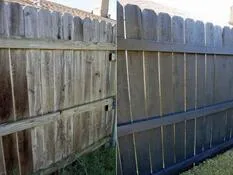
Wood fences around St. Louis turn grey quickly and grow mildew on the shaded side in the humid months. A wash and a coat of stain protect the boards and even out the color. New pressure-treated fences need time to dry before the first coat, and we check that before we start.
The usual backyard fence around St. Louis is a six foot wood privacy fence in treated pine or cedar, often running along an alley in the city or between lots in the county. Older neighborhoods also have wood pickets out front and iron or steel fences that need scraping and a rust stopping primer. Left bare, wood greys within a season or two. The shaded north side turns green with mildew during the humid months, and the bottoms of the boards stay damp.
We wash the fence at low pressure with a cleaner that kills mildew, then give it time to dry. Loose boards are refastened and broken pickets replaced. Grass and plants along the line are tied back or covered, and we protect the neighbor's side, cars and nearby brick from overspray. Stain is sprayed and then brushed in so it gets into the grain and the gaps. Iron is wire brushed, primed on the bare spots and finished with enamel.
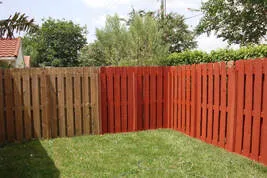
Stain is our first choice for most wood fences. A semi-transparent stain shows the grain, and a solid stain covers more and evens out old and new boards. Paint gives a crisp look on pickets but needs more upkeep, since it peels when water gets behind it. A brand new treated fence is too wet to coat right away. We test it, and if the water beads we come back when it soaks in instead.
Fence painting & staining in St. Louis: common questions
Do you stain both sides of the fence?
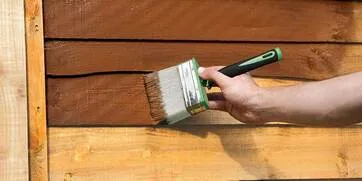
We can. The side facing your neighbor needs their agreement and access to their yard. Staining both sides protects the wood better. If only one side is done, we seal the tops and edges we can reach.
Can you match new fence boards to the old ones?
A solid stain will bring old and new boards close to one color. With a semi-transparent stain the new wood will look a little different at first. Washing the old boards before staining narrows the gap.
Can you repaint an old iron fence in front of a city house?
Yes. We scrape and wire brush the loose paint and rust, prime the bare metal and apply two coats of enamel. Paint from before 1978 may contain lead, so the scraping is done with ground covers and cleanup.
How it works
- Free estimate: Call, text or book online. We walk the job and measure.
- Written quote: Prep, paint and price in writing.
- Prep & protect: We cover floors and furniture, repair and prime surfaces.
- Paint & walk-through: Two coats, clean lines, full clean-up and a final walk-through.